Membership
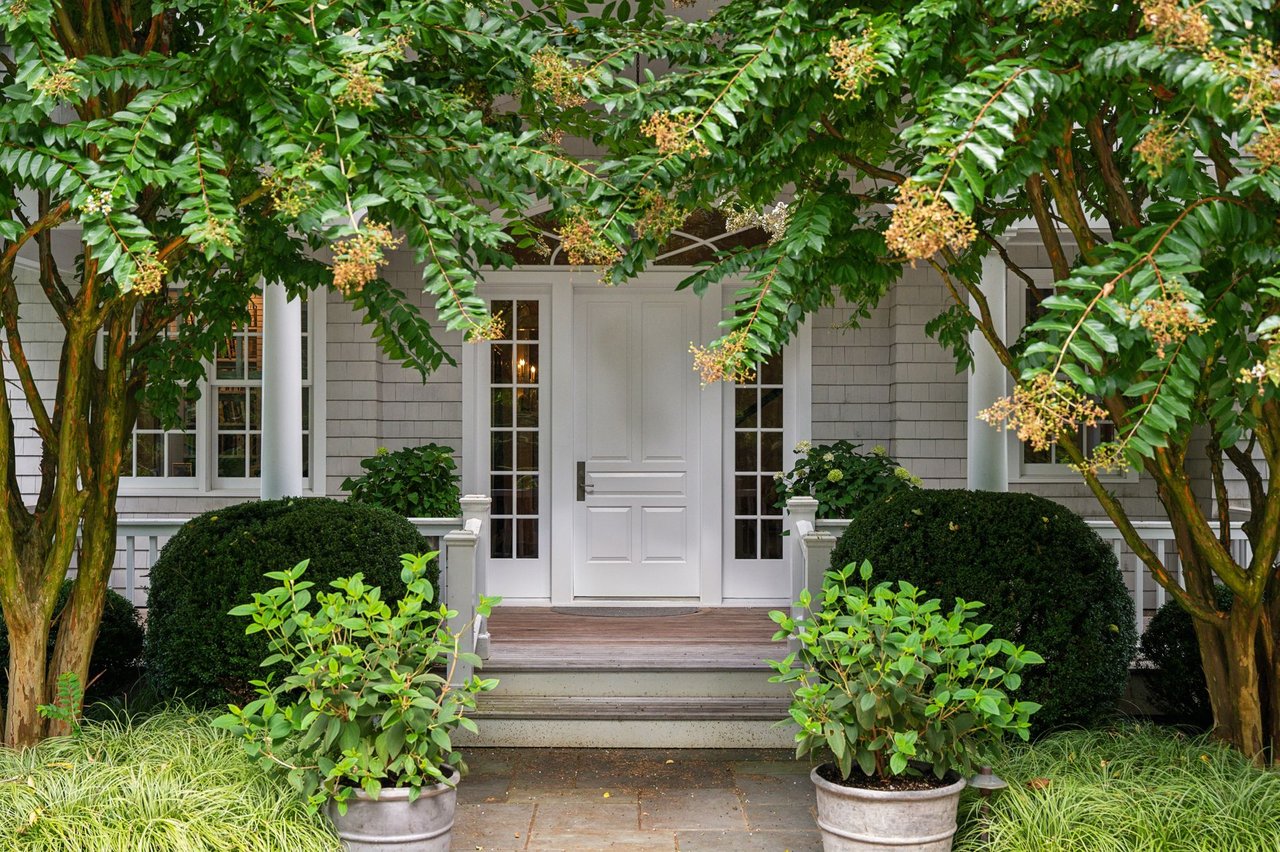
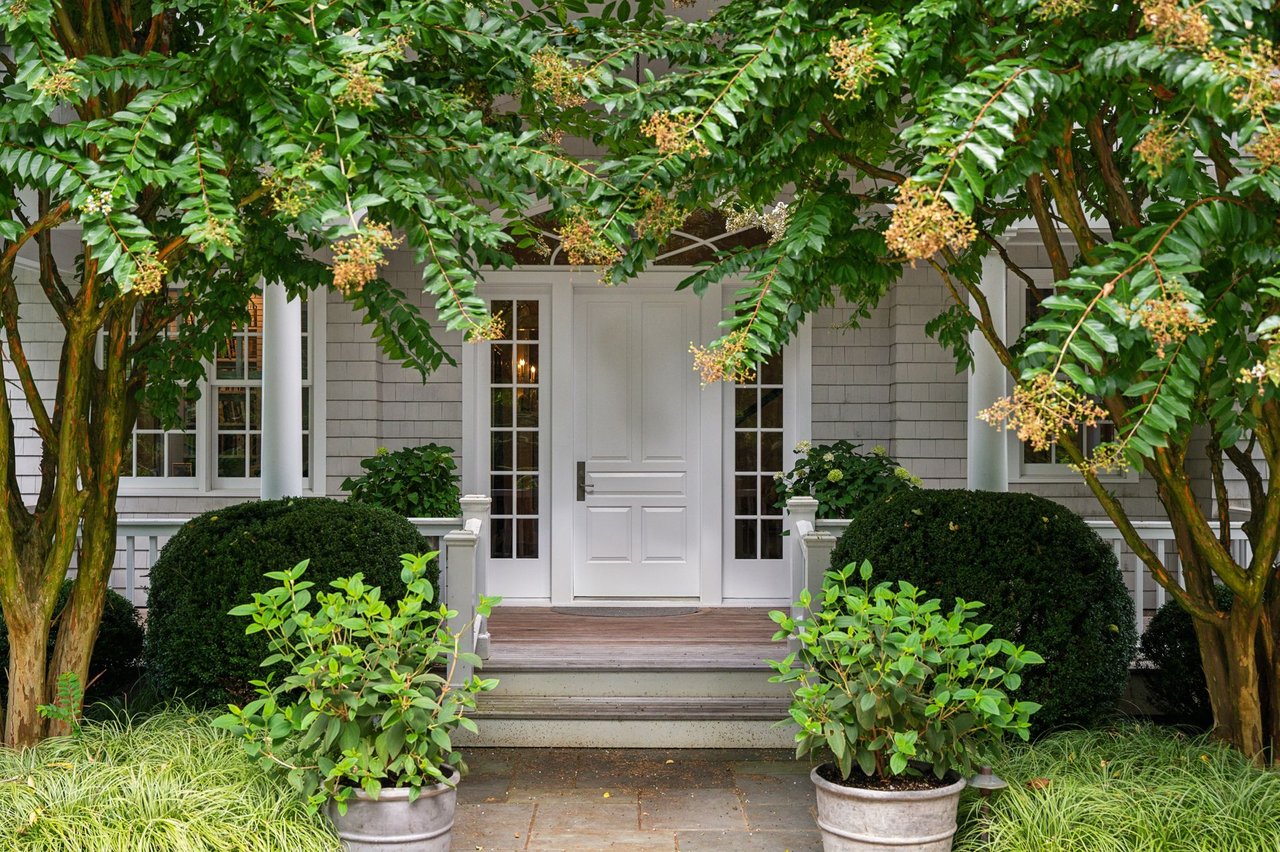
A home’s architecture may establish its character, but the landscape surrounding it often determines how that character is first experienced.
Before the front door opens, there is an approach to consider: the line of trees along a driveway, the texture of a gravel path, the way a garden frames the entrance, and the relationship between the house and the land around it. These details create an introduction to a residence, setting a tone that continues throughout the property.
In the Hamptons, Susan Breitenbach has long recognized the role that thoughtfully designed grounds play in defining exceptional estates. From established privet hedges and specimen trees to carefully composed entrances, the landscape is an integral part of the architectural experience, creating a sense of arrival that begins well before anyone steps inside.
The experience of arriving at a home is often as carefully considered as its interiors.
A winding gravel driveway, framed by mature trees or dense privet hedges, creates a sense of anticipation. Rather than revealing the entire property at once, a thoughtfully designed approach allows the landscape to gradually introduce the architecture.
This sense of progression is particularly characteristic of Hamptons estates, where privacy and a connection to nature are often expressed through the grounds themselves.
Hedges provide structure and enclosure, while specimen trees and layered plantings introduce scale and variation. A well-composed entrance draws the eye toward the home without competing with its architectural features.
The most successful landscapes feel intentional without appearing overly arranged. They establish a visual rhythm that makes the transition from the surrounding environment to the private residence feel natural.
Susan Breitenbach
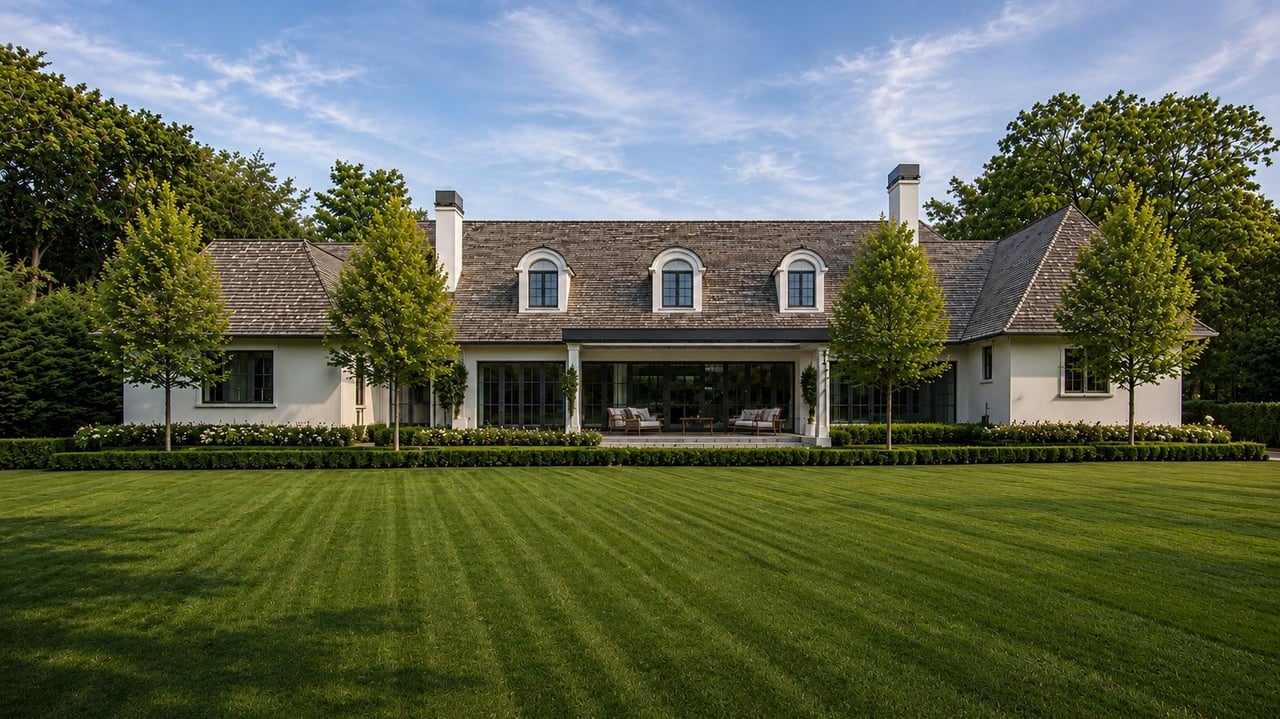
There is a particular quality to a mature landscape that is difficult to replicate immediately.
Established trees, substantial hedges, and layered garden beds give a property a sense of permanence. Their scale and character reflect years of growth, creating a relationship between the home and its setting that newly planted landscapes cannot achieve overnight.
In the Hamptons, privet hedges have become something of a signature. Their dense greenery provides privacy while creating clean architectural lines across expansive grounds. Specimen trees, ornamental grasses, and perennial plantings soften these structures, bringing movement and seasonal variation into the landscape.
There is also a growing appreciation for planting choices that respond to the coastal environment. Native and salt-tolerant species can help create gardens that feel naturally suited to their surroundings, balancing visual appeal with long-term resilience.
The result is a landscape that feels less like decoration and more like an extension of the property’s architecture.
Susan Breitenbach
The relationship between landscaping and outdoor living extends well beyond the garden.
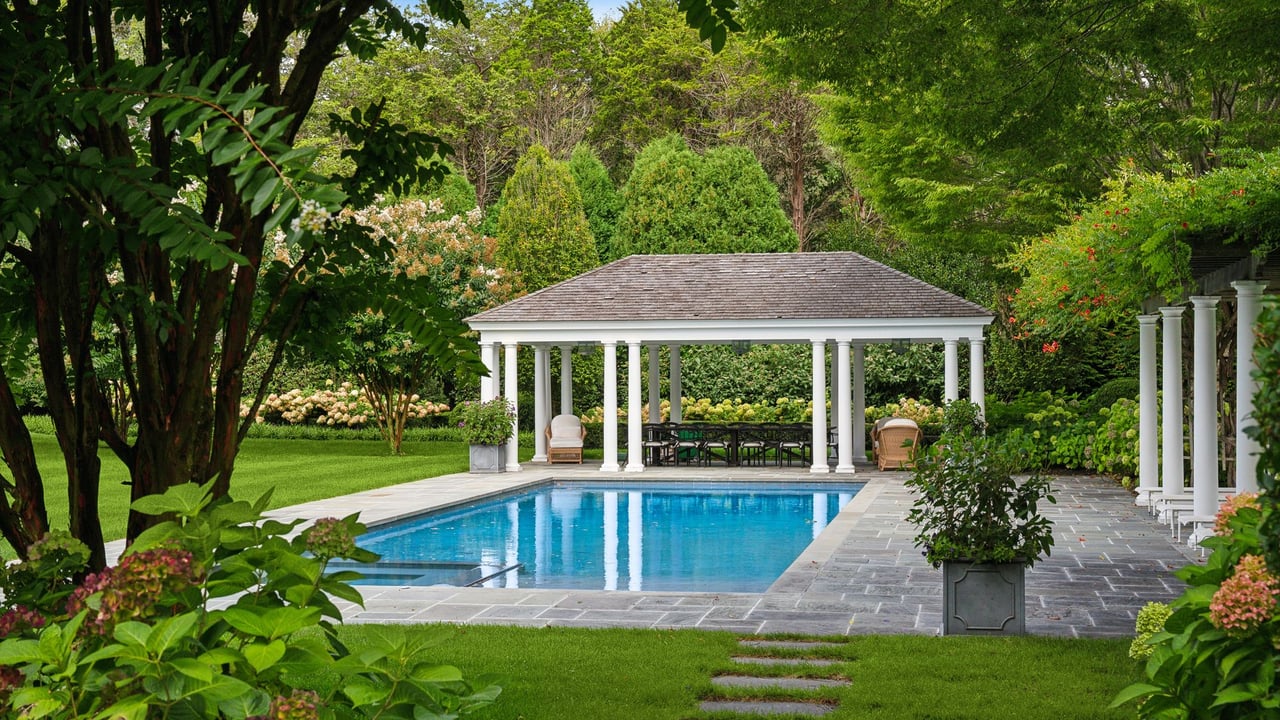
Pool terraces, lawns, patios, and dining areas are increasingly approached as connected environments, each with its own purpose while contributing to a larger composition.
Materials play an important role in establishing that continuity. Bluestone terraces, natural stone pathways, and carefully maintained lawns create transitions between the home and its outdoor spaces.
Planting can then be used to define individual areas without making them feel disconnected. A line of greenery might provide privacy around a pool, while a mature tree can create a natural focal point within an open lawn.
These details allow the landscape to function as an extension of the home’s living spaces, offering places for gathering, entertaining, and enjoying the surrounding environment.
A beautifully designed landscape is also an evolving one.
Seasonal maintenance, thoughtful pruning, healthy plantings, and carefully defined garden edges all contribute to the way a property is experienced. Even relatively subtle details, such as a freshly maintained gravel driveway or neatly shaped hedges, can make the entire setting feel more composed.
Importantly, maintaining an established landscape is often more meaningful than introducing entirely new elements. Preserving mature plantings and allowing the existing character of the grounds to come through can create a more authentic result than a complete redesign.
This is especially true in places like the Hamptons, where the appeal of a property is so closely tied to its sense of place.
Susan Breitenbach
The most memorable residences are rarely defined by architecture alone. They are experienced as a collection of connected elements, from the first glimpse of the entrance to the relationship between the interior and the surrounding grounds.
Landscaping plays a central role in that experience. It establishes privacy, frames architectural details, creates opportunities for outdoor living, and gives a property a sense of maturity and belonging.
In this way, the grounds are not simply the setting for a home. They are part of the home itself, shaping its identity long before anyone steps inside.